
Tokyo experience
Sumo in Tokyo
Grand tournament seats, year-round sumo shows with a hot pot meal, and morning practice at a working stable, compared on what you actually see, when it runs and whether you can get your money back.
- Tokyo tournaments 2027
- Jan 10-24 · May 9-23 · Sep 12-26
- Venue
- Ryogoku Kokugikan, Sumida
- January tickets on sale
- December 5, 2026 (official)
- Any other month
- Sumo shows and stable visits
Photo: Bob Fisher / Unsplash
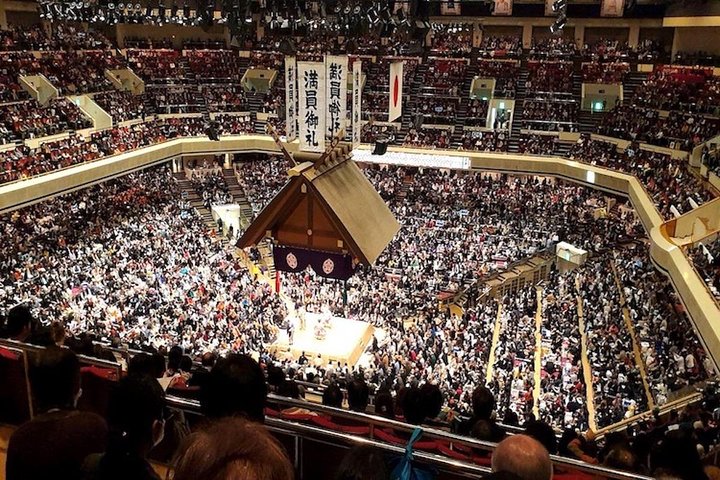
How you see sumo in Tokyo depends on your dates. Real tournament sumo is held at Ryogoku Kokugikan only three times a year: in 2027 that means January 10 to 24, May 9 to 23 and September 12 to 26, according to the Japan Sumo Association. If your trip overlaps, a tournament day is the one to plan around.
If it does not, you have two honest alternatives. A sumo show runs year-round, puts retired wrestlers in a ring a few feet from your table, and often comes with chanko hot pot. Our pick is SHINJUKU SUMO CLUB's show, rated 4.95 across 6,509 reviews and priced from $51. A morning stable visit is the opposite: silent, serious, and the only way to watch active professionals outside a tournament.
We checked every option below on Viator on November 28, 2026. Read the cancellation column closely. Tournament packages are the ones most likely to be non-refundable.
Short on time?
Our top picks
 Best overall Free cancellation
SHINJUKU SUMO CLUB
Tokyo Shinjuku Sumo Show & Experience with Photo
Runs year-round in Shinjuku, costs from $51, cancels free up to 24 hours ahead and has 6,509 reviews at 4.95.
From$51
Check availabilityBook on Viator · price per person
 Best show with a meal Free cancellation
Beauty of Japan
the SUMO show - Sumo & Dining Experience at Dosukoi Tanaka Tokyo
Retired professional wrestlers, a tonkatsu and chanko hot pot meal, and a 4.92 rating from 2,599 reviews.
From$101
Check availabilityBook on Viator · price per person
 Best for tournament seats
Japan Awaits
Ultimate Sumo Tournament: Tokyo, Osaka, Nagoya, Fukuoka
A reserved seat at Ryogoku Kokugikan with an English-speaking sumo guide, rated 4.88 from 593 reviews. Viator lists it as non-refundable.
From$125
Check availabilityBook on Viator · price per person
Sumo, side by side
Compare all 10 options
Filter by what matters to you, then check live dates and prices on Viator.
Sumo show · 90 minutes
Tokyo Shinjuku Sumo Show & Experience with Photo
4.95(6,509 reviews)$51Show + meal · 90 minutes
the SUMO show - Sumo & Dining Experience at Dosukoi Tanaka Tokyo
4.92(2,599 reviews)$101
Show + meal · 2 hours
Tokyo Sumo Entertainment Show with Chicken Hot Pot and Geisha
4.83(1,681 reviews)$103
Sumo show · 90 minutes to 2 hours
Tokyo Sumo Experience: Wrestler Challenge Hotpot & Mochi-Pounding
4.91(356 reviews)$61
Show or hands-on · 60 to 80 minutes
Tokyo Ginza Sumo Experience: Sparring with Champions&Free Chanko
4.85(490 reviews)$96Tournament + guide · About 4 hours
Ultimate Sumo Tournament: Tokyo, Osaka, Nagoya, Fukuoka
4.88(593 reviews)$125
Tournament + guide · 4 hours 30 minutes
Tokyo: Enjoy Sumo match and know about it! [Ticket included]
4.87(39 reviews)$192
Stable visit · 3 hours
December Morning Sumo Practice
4.94(66 reviews)$96
Stable visit · 60 to 90 minutes
Watch Sumo Morning Practice at Stable in Tokyo
4.25(273 reviews)$93
Stable visit · 2 hours
Tokyo Sumo Morning Practice with Guide – Ringside Live Training
4.90(21 reviews)$80
From-prices are in USD, per person unless marked per group. Prices checked November 28, 2026. They vary by date and option. Links open Viator, where availability and cancellation terms are shown before you pay.
Tournament, show or stable: which one you want
These are three different products, and the listings do not always make that obvious.
- Grand tournament. The actual sport: ranked professionals, real results, a full arena. In Tokyo it happens in January, May and September only. The other three tournaments of 2027 are in Osaka (March), Nagoya (July) and Fukuoka (November).
- Sumo show. Entertainment, and the operators say so. Asakusa Sumo Club describes its event as an entertainment show with retired wrestlers and points serious fans toward an active stable instead. You get explanations in English, a mock bout, and a chance to face a wrestler yourself. Shows run all year and most cancel free up to 24 hours ahead.
- Morning practice. A guided visit to a working stable to watch training. No commentary during practice, no performance, and you sit on the floor. It is the closest you can get to the wrestlers, and the most demanding on the visitor.
Our rule: if a Tokyo tournament falls inside your trip, go to that. If not, book a show for fun or a stable for authenticity. Do not book a show expecting competition, and do not take a restless six-year-old to a stable.
2027 Tokyo tournament dates and how tickets are sold
The Japan Sumo Association publishes the schedule a year or more ahead. For Tokyo in 2027, all at Ryogoku Kokugikan:
- January Tournament: January 10 to 24. Advance tickets go on sale December 5, 2026.
- May Tournament: May 9 to 23. Advance tickets from April 10, 2027.
- September Tournament: September 12 to 26. Advance tickets from August 7, 2027.
Official tickets are sold through the association's own service, Ticket Oosumo, which has an English site linked from sumo.or.jp. There are two seat families: masu box seats, where up to four people sit on cushions on the floor, and arena chair seats like those in any stadium. The association quotes approximate prices of 3,500 to 5,500 yen for a B or C chair seat and 34,000 to 42,000 yen for a B or C box for four, with weekends higher, a handling fee on top, and a note that prices vary by venue.
That is far less than a guided package, so the do-it-yourself route is the better deal if you are comfortable buying on the official site the day sales open. We could not verify how quickly days sell out, so check the official site for current availability before you rely on it.
What a package adds is a guide and a seat someone else secured. Japan Awaits gives you a reserved second-floor seat in a join-in group of about 15 to 20 with an English-speaking sumo guide. Its listing is clear that first-floor box seats are not included, that exact seats are allocated, and that tickets are subject to availability. gotcha runs a group of up to 15 with a C-class seat and a guided look around the arena.
Refunds: read this before you pay
Cancellation terms differ more here than on almost any other Tokyo experience.
- Japan Awaits tournament package. Viator lists it as all sales final. The operator's notes on the same listing describe a sliding scale with a full refund more than 20 days out. Until you have that confirmed in writing, treat it as non-refundable. It also needs a minimum of 15 participants; the operator says it offers an alternative or a full refund if it cannot run or cannot secure tickets.
- gotcha tournament tour. Viator shows free cancellation up to 24 hours ahead, which is unusual for a product with a ticket inside. It has only 39 reviews.
- Beauty of Japan stable visit. Full refund only if you cancel at least six days ahead, half between two and six days, nothing after that. The listing adds that date changes inside three days count as a cancellation, even for a delayed flight.
- Shows and the other two stable visits. Standard free cancellation up to 24 hours before.
One more catch on the tournament listing: its cheapest options include other cities and an off-season stable visit near Warabi Station in Saitama, outside Tokyo. Check that the option in your basket says Tokyo and Ryogoku Kokugikan.
Choosing a sumo show
The five shows differ mainly on food, location and how much you take part.
- No meal, lowest price: SHINJUKU SUMO CLUB in Shinjuku. Ninety minutes, a bilingual host, a welcome drink and a lottery to challenge a wrestler. Children of any age are accepted.
- Meal by the wrestlers: the Dosukoi Tanaka show (Beauty of Japan) serves tonkatsu and chanko hot pot in a restaurant built around a ring. Ask for vegetarian, chicken or seafood substitutes at least five days ahead.
- The longest evening: Asakusa Sumo Club in Asakusa adds all-you-can-eat chicken hot pot, a geisha dance and a printed photo over two hours.
- In sumo's home district: SUMO LAND in Ryogoku adds mochi pounding. Its lowest price is a show-only option; the hot pot is on the full course.
- Hands-on: the Ginza venue sells a session where you try the stamping and sparring yourself. That option is not for children under 5 or pregnant guests.
Every show uses a lottery for the wrestler challenge when too many people volunteer, so nobody is guaranteed a turn.
Morning practice: what the listings warn you about
A stable is a workplace and a home, and visits happen on the stable's terms. The listings are blunt about it.
- You sit on the floor. Arumachi states that everyone sits on a cushion and no chairs are available. The other operator requires you to sit on the floor for an extended period.
- Age limits. 13 and up with Beauty of Japan; 6 and up with Arumachi and YURAGI.
- Dates are limited. Stables travel for tournaments in other cities, so there is no practice in Tokyo then. Arumachi publishes specific operating dates each month. Beauty of Japan can only confirm conditions about a week ahead.
- Tournament weeks are shorter. During Tokyo tournaments Beauty of Japan says practice lasts 30 to 40 minutes instead of the usual 60 to 90, at the same price.
- Photos are likely, not promised. Each listing mentions photos with wrestlers after practice, one of them with the words "most probably".
Follow your guide's instructions on silence and photography during practice. Rules are set by each stable, so we have not listed them here.
Good to know
Frequently asked questions
When is sumo in Tokyo in 2027?
The Japan Sumo Association lists three Tokyo tournaments at Ryogoku Kokugikan in 2027: January 10 to 24, May 9 to 23 and September 12 to 26. The March, July and November tournaments are in Osaka, Nagoya and Fukuoka.
How do I buy sumo tickets in Tokyo?
Official tickets are sold through Ticket Oosumo, the Japan Sumo Association service, which has an English site linked from sumo.or.jp. Advance sales for the January 2027 tournament open on December 5, 2026, for May on April 10, 2027, and for September on August 7, 2027. Guided packages with a seat included are sold on Viator.
How much are sumo tickets in Tokyo?
The Japan Sumo Association quotes approximate prices of 3,500 to 5,500 yen for a B or C arena chair seat and 34,000 to 42,000 yen for a B or C box seating four, with weekends and holidays higher and a handling fee added. Prices can vary by venue. Guided packages cost more because they include a guide and a pre-arranged seat.
Can I see sumo in Tokyo when there is no tournament?
Yes. Sumo shows with retired wrestlers run year-round in Shinjuku, Asakusa, Ryogoku and Ginza, and guided morning practice visits run on dates when stables are training in Tokyo. Shows are entertainment, not competition.
Are sumo tournament tickets refundable?
It depends on who sold them. On Viator, the Japan Awaits tournament package is listed as all sales final, while the gotcha tour shows free cancellation up to 24 hours ahead. Check the policy on the booking page before you pay. We could not verify the refund rules for official tickets, so check the official ticket site.
Is a sumo show or a stable visit better?
A show is better for families and first-timers: it is explained in English, lasts 90 minutes to two hours, and often includes a meal. A stable visit is better for fans who want to watch active professionals train and can sit quietly on the floor for an hour or more.
Can children watch sumo in Tokyo?
Shows welcome children; SHINJUKU SUMO CLUB and several others accept all ages. Stable visits set minimums of 6 or 13 depending on the operator. The Japan Awaits tournament package has no minimum age but charges adult price for anyone needing a seat.


Our top pick
Tokyo Shinjuku Sumo Show & Experience with Photo
★ 4.95 (6,509 reviews) · from $51